Clear, unbiased guides to help you understand, choose, and invest in ETFs with confidence.
A Simple Approach to ETF Investing
The 10 Best ETFs for Beginners in 2026
Investing in 2026 offers new opportunities, but choosing the right ETFs is essential for long-term success. ETFs provide diversification, low costs, and an easy way for beginners to enter the market. In this guide, we highlight the 10 best ETFs to help you build a strong and balanced portfolio.
What is an ETF and Why Should You Invest in 2026?
If you are just starting your
journey into the world of finance, you have likely heard the term ETF mentioned alongside stocks and bonds. But what exactly is it?
Dividend ETFs: How to Build a Passive Income Stream in 2026
Dividend ETFs have become a popular way to build a private pension that increases over time. But how do you tell the good ones from the dividend traps?
How to Analyze Any ETF
This section will highlight specific details about a particular framework to analyze any ETF effectively.
You will learn how to evaluate performance, underlying assets, costs, and risk factors.
By the end, you’ll have the tools to make smarter, data-driven investment decisions.
Bond ETFs
In this article, we will break down what Bond ETFs are and how they function within an investment portfolio. You will learn about different types of bond ETFs, their risks, returns, and key characteristics. By the end, you’ll understand how to evaluate and use bond ETFs to build a more balanced strategy.
Accumulating vs Distributing ETFs
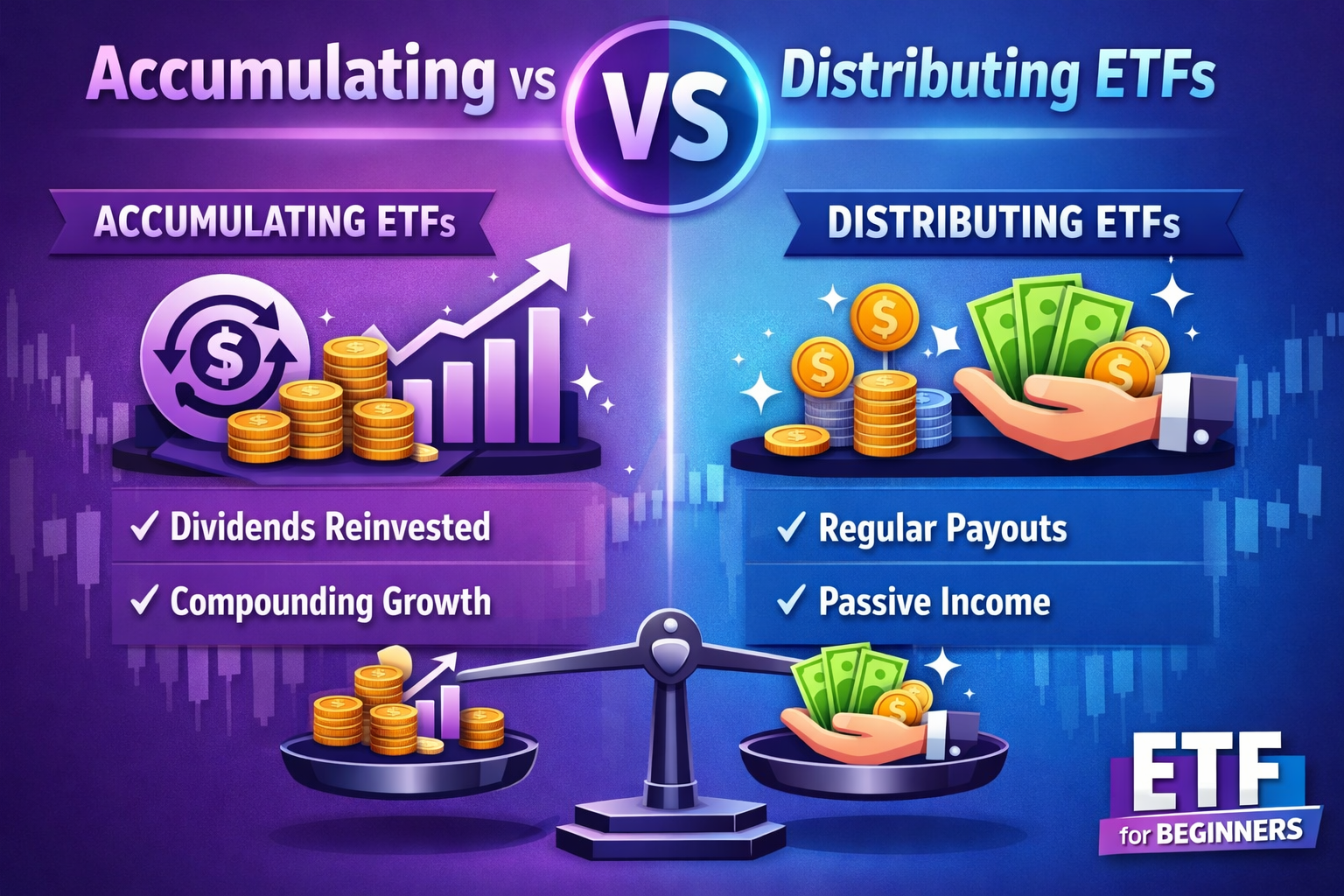
In this article, we will compare accumulating and distributing ETFs and how they handle investor returns. You will learn the key differences in dividend treatment, tax implications, and long-term growth impact. By the end, you’ll be able to choose the option that best fits your investment strategy.
Proven ETF Strategies to Start Investing with Confidence
1Start with a Broad Market ETF
Invest in a low-cost, diversified ETF that tracks the overall market (such as an S&P 500 or Total Market ETF) This gives you instant diversification and reduces single-stock risk.
2 Use Dollar-Cost Averaging
Invest a fixed amount regularly (weekly or monthly), regardless of market conditions.
This reduces emotional decision-making and smooths out market volatility over time.
3 Focus on Low Costs and Long-Term Holding
Choose ETFs with low expense ratios and hold them for the long term. Avoid frequent trading and short-term speculation — consistency builds wealth.
© 2026 ETF for Beginners. All rights reserved.
Our mission is to make investing simple, clear, and accessible for everyone. The information provided on this website is for educational purposes only and should not be considered financial advice.
Start your journey with confidence and keep learning with us.